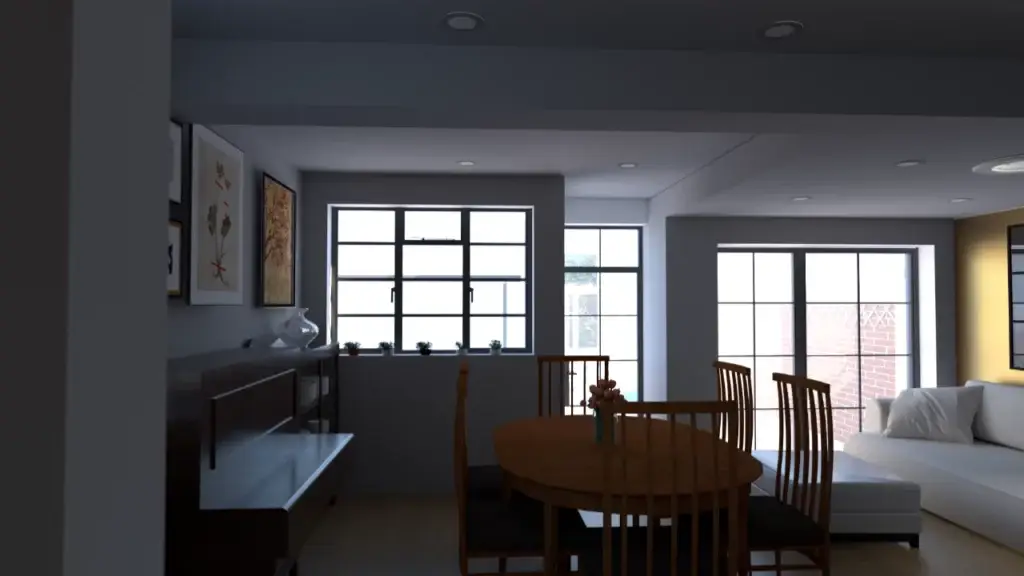
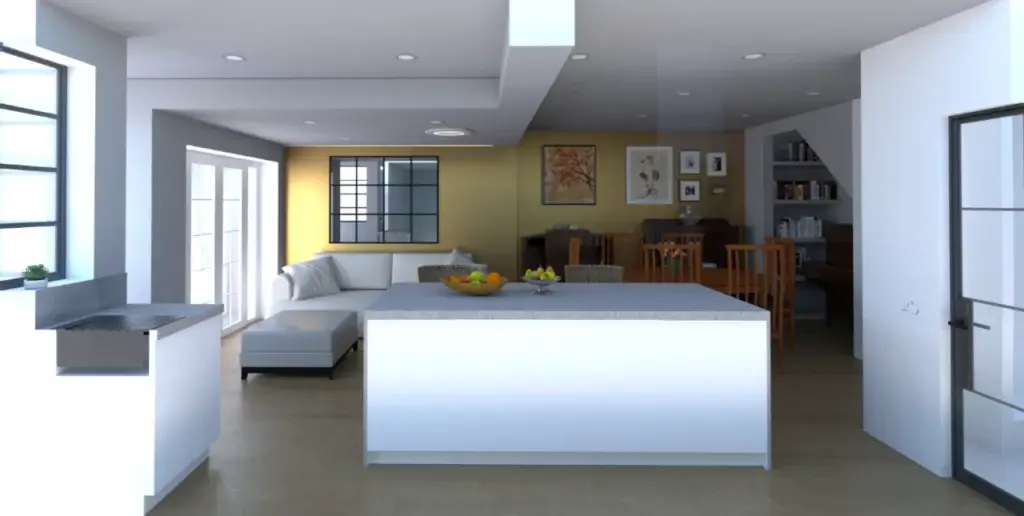
How to improve your home with the help of an architect.
An architect can make extraordinary improvements to your home by making it more efficient to live and work in, bringing in more natural light, improving the flow, and connecting it to the garden.
At G. A. Architects, we do this by listening carefully to your lifestyle and what is important to you.
We strive to comprehend the project’s contextual boundaries, and we can imagine appropriate interventions with this understanding.
The essential thing to remember is that context is always the key to unlocking a relevant and practical design.
Design: You and your home are where it begins.
The three essential ‘Contexts’ for home making are.
Context 1. The existing house.
The existing home imbues a finite number of opportunities for change. All houses differ in layout, aspect, structure, and size, which are some boundaries that create this context.
For example, the size of your plot could severely constrain what can be done and reduce the options. Similarly, the orientation of your home to the sun will constrain how much natural light enters.
Context 2. Your lifestyle.
This context comprises your personal needs, principles, preferences and aspirations.
These are the boundaries of this particular context. Some examples will be gleaned from you, based on how you live and how you want to live.
We get to know you and reflect your personal way of being in your home. After all, your home is the only series of
These are spaces where you have the freedom and opportunity to be yourself.
We believe that your home should reflect you.
Design: You and your home are where it begins.
Contact us to improve your home, your environment and your life.
Design: You and your home are where it begins.
An existing kitchen prior to the design phase
Context 3. Statutory and legal constraints.
The simplest housing extensions can be built without planning permission if they comply with the ‘permitted development’ rules.
These rules are very particular and it is easy to misinterpret them. Due to this possibility there is an application known as a Certificate of lawful development’ which allows us to submit the drawings to your local council asking them to confirm if the proposals comply with ‘ permitted development’ rules. This takes the same time as a planning application.
The statutory time limit is 8 weeks, but due to their backlogs, councils usually take 10-12 weeks to decide an application.
The local planning policy explains what you are allowed to build, and if it does not fall within permitted development, a planning application will be required.
This application asks the local council to assess the drawn proposals and confirm their availability.
Following planning approval, the building work must comply with the building regulations.
This is the second phase of the design, known as detailed design. This is where we see the design and can confidently examine the details to make it work. This detail ranges from drainage to structural design, and the interior design can also be finalised.
At the end of the design stage, you can be confident that your requirements are clearly stated in drawings and written documents for the builders/ contractors to quote and work to.
A concise and well thought-through design will avoid misunderstandings, missed opportunities and regrets.
Let G.A. Architects help you do that; you won’t regret it.